The scenario is familiar to most operations leaders managing large portfolios. Ownership asks why maintenance costs are up 18% in one market, and the most honest answer available is: let me pull a report and get back to you.
That gap is the most expensive problem in large portfolio maintenance. Not the repairs themselves, but the inability to manage them at a systems level. When data exists but can’t be accessed, compared, or acted on in real time, operations leaders are perpetually a step behind the problems they’re trying to solve.
This guide breaks down what real portfolio-level visibility looks like, which metrics actually matter, and what it takes to get from reactive to genuinely data-driven managing thousands of doors.
Why maintenance visibility breaks at scale
At smaller portfolio sizes, visibility is more manageable. Operators know their properties, their vendors, their coordinators. Problems are noticeable because there’s proximity to see them.
Scale changes everything. When you’re looking at thousands of units, especially across multiple markets or a mix of property types, the job shifts from managing maintenance to managing a system that’s supposed to manage maintenance. Systems need data to work.
Here’s what typically happens instead:
- The property management system tracks maintenance requests, but reporting requires manual exports and reconciliation in Excel
- Each regional manager runs their own process, so data isn’t comparable across properties
- Average time-to-complete is visible at the portfolio level, but drilling into why one property runs at 3 days and another at 11 requires three phone calls
- When ownership asks hard questions about maintenance spend, the answers exist. Pulling them together just takes a full day
| The problem isn’t a lack of data. It’s that the data available doesn’t tell operations leaders anything useful in real time. |
The difference between data and visibility
Most property management software tracks maintenance. That’s not the same as providing visibility.
Data is a maintenance request being logged and closed. Visibility is knowing that a specific vendor is closing HVAC requests 40% slower than the portfolio average, and identifying that pattern before it affects resident satisfaction scores.
Data is a monthly report of completed requests. Visibility is understanding why one market outperforms another on first-time fix rate and being able to replicate that operationally.
Real visibility means maintenance data is:
- Real-time, not exported at the end of the month
- Comparable across properties, regions, and asset types rather than stored in five different formats
- Actionable, surfacing problems before they become crises
- Defensible, so operations leaders can walk into budget meetings with numbers they trust
The metrics that actually matter
Not every number in a property management system deserves equal attention. Here are the maintenance metrics that matter most to operations leaders at large portfolios and what each one actually tells you.
Time-to-complete
How long it takes from submission to completion. The baseline metric. Most operators track this, but fewer track variance in segmented cycle times, which reveals far more than the average alone. A 4-day average with a 2-day assigned to schedule metric, means the operation is inconsistent even if the average looks acceptable.
First-time fix rate
The percentage of maintenance requests resolved in a single visit. A low first-time fix rate is expensive in multiple directions: it increases labor cost, multiples trip charges, erodes resident trust, and signals an intake and triage or parts-readiness problem.
Resident maintenance satisfaction
CSAT or NPS scores tied specifically to maintenance interactions. This is the leading indicator for renewals. It moves before churn does, which means operators who watch it can intervene before residents decide not to renew.
Cost per maintenance request
Total maintenance spend divided by completed requests, segmented by category. This is how vendor pricing drift gets caught, overpriced recurring issues get identified, and the in-house vs. vendor cost question gets answered with actual numbers.
Vendor SLA compliance
What percentage of vendor-dispatched requests are completed within defined SLA windows? For portfolios running a vendor-heavy model, this is the accountability metric that keeps the network honest.
After-hours and emergency response time
How fast legitimate emergencies get resolved. This metric sits at the intersection of resident safety, liability exposure, and operational credibility.
Maintenance contribution to renewal rate
The hardest to measure but the most important to own. Operations leaders who can connect maintenance satisfaction data to renewal outcomes have a powerful tool in budget conversations, because they can quantify what slow response actually costs in lost revenue.
| Tracking everything isn’t the goal. Tracking the right things and being able to explain what they mean is. |
What variance reveals about an operation
There’s a frame that most operations leaders find more useful than any single metric: variance.
When the best property and the worst property in a portfolio are running two completely different maintenance operations, the question isn’t why the low performer is struggling. The question is what the high performer is doing that the low performer isn’t.
Variance is diagnostic. A high-variance operation has inconsistency built into its process. Real visibility turns variance into something that can be actively managed, not individual fires, but the systemic gaps that let fires happen at some properties and not others.
The reporting asset managers actually want
The maintenance reporting that works for internal operational management and the reporting that works for ownership or asset management are not the same document. Ownership doesn’t care about time-to-complete. They care about NOI, asset condition, and risk.
The translation looks like this:
- Maintenance satisfaction feeds into renewal rate, which drives revenue retention per unit
- First-time fix rate reflects labor cost efficiency and controllable opex per unit
- Preventive maintenance completion rate signals deferred maintenance risk and asset valuation impact
- Vendor SLA compliance reflects emergency response reliability and liability exposure
When operations leaders can connect those dots, the maintenance budget conversation shifts from defense to strategy.
What getting this right actually looks like
Operations leaders who have real maintenance visibility describe the same shift: they stop being surprised. Vendor performance declines get caught before they become resident complaints. Properties drifting from portfolio norms get flagged before CSAT scores move. Quarterly reviews with ownership become conversations about strategy, not cost justification.
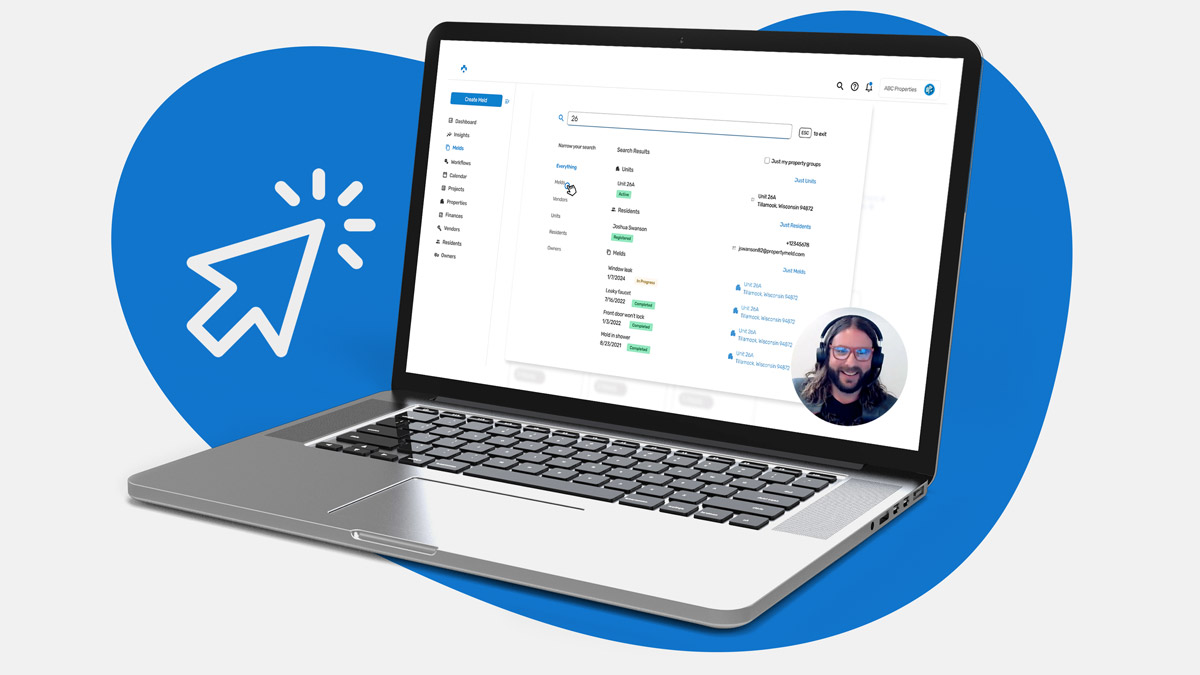
Property Meld’s oversight and data tools are built exactly for this. Real-time dashboards. Portfolio-wide performance benchmarks. Drill-down by property, region, vendor, or maintenance category. The kind of visibility that lets operations leaders run maintenance like a business.
Want to see where your operation stands? Property Meld publishes a monthly benchmark report with real-time industry data. Download it here.